


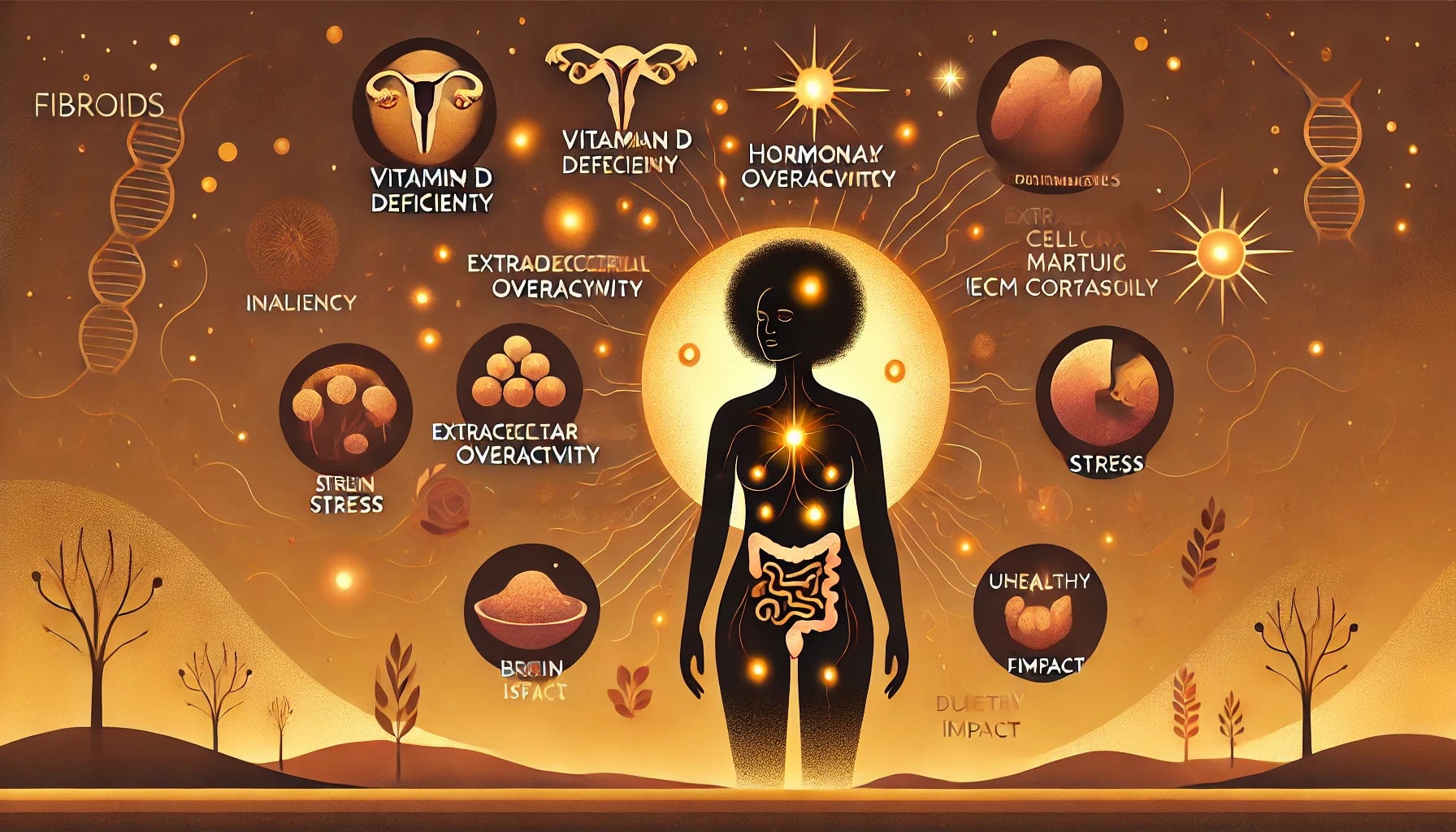
If you're a so-called ‘Black’ woman, chances are you've heard about or even experienced fibroids first hand. They're incredibly common, but what’s frustrating is that ‘Black’ women are disproportionately affected. Not only do we develop fibroids at higher rates, but we also tend to have more severe symptoms and an earlier onset. The question you constantly have to ask yourself is why?
Science has a lot to say about it, and while they say the research is still evolving, there is plenty of evidence that explains why this is happening; some we are fully aware of, but there are factors we might be less aware of.
Vitamin D: The "Sunshine" Factor
One major piece of the puzzle is vitamin D deficiency. We all know vitamin D is important, but did you know it plays a role in fibroid growth? Many of you do.
Studies show that women with low vitamin D levels are significantly more likely to develop fibroids than those with sufficient levels.
Because Black women have higher melanin levels, we need sunshine. Sunlight is a natural nutrient for darker skin.
Although research suggests that supplementing with vitamin D may help slow down fibroid growth or even prevent them from forming in the first place, the best form is sunlight.
So if you’re not getting enough sun or eating vitamin D-rich foods, this might be something to look into if you are not already doing it.
Oestrogen, Aromatase, and How Hormones Play a Role
Hormonal imbalance is another big factor, particularly when it comes to oestrogen and aromatase. Aromatase is the enzyme responsible for converting androgens into oestrogen, and guess what? Black women have been found to have higher aromatase activity than other racial groups. Since fibroids thrive on oestrogen, this can contribute to their rapid growth.
A study published in The Journal of Clinical Endocrinology & Metabolism found that Black women have higher circulating oestrogen levels, even before puberty.
More oestrogen = more fuel for fibroids, which may explain why we experience them more often and at younger ages.
This is why managing oestrogen levels through diet and lifestyle is so important. Do note that this oestrogen is mainly coming from external sources.
The Extracellular Matrix (ECM): A Fibroid’s Playground
If you’ve never heard of the extracellular matrix (ECM) before, don’t worry, let me explain. It’s basically the structural support system for our cells, but when it comes to fibroids, it’s overactive in Black women.
Fibroids contain excessive amounts of ECM, making them larger, stiffer, and harder to shrink.
ECM also stores growth factors that can keep fuelling fibroids, making it a vicious cycle.
Understanding this is key because it means tackling fibroids isn’t just about balancing hormones, it’s also about addressing how our bodies build and maintain tissue.
Stress: The Missing Piece No One Talks About
We know stress affects our health, but did you know it can also impact fibroid growth?
Chronic stress leads to increased levels of cortisol, a stress hormone that can throw off the delicate balance of oestrogen and progesterone in the body.
Stress can also promote inflammation, which has been linked to fibroid growth.
Let’s not forget that dealing with daily microaggressions, systemic pressures, and just life in general as a Black woman adds another layer of stress that often goes unaddressed.
This means that incorporating stress management techniques, whether it’s meditation, exercise, therapy, or just setting boundaries, can be an essential part of fibroid prevention and management.
Why Diet Matters for ‘Black’ Women
Given these unique biological differences, it makes sense that what we eat plays a huge role in managing fibroid risk. While there’s no one-size-fits-all diet, research suggests that certain foods can help regulate hormones and reduce inflammation.
To keep fibroid growth at bay, avoid these foods:
Processed meats and high-fat dairy – May contribute to increased oestrogen levels.
Alcohol and caffeine – Elevates oestrogen and cortisol levels.
Refined sugars and artificial sweeteners – May lead to insulin resistance, inflammation.
Soy and soy-based products – Contain phytoestrogens that mimic oestrogen in the body.
Non-organic produce – Contains pesticides and herbicides that act as endocrine disruptors.
Refined carbohydrates (white bread, white rice, pastries, etc.) – Can cause blood sugar spikes and increase inflammation.
Fried and fast foods – High in trans fats, which can promote inflammation.
Soda and sugary beverages – Contributes to insulin resistance and increases the risk of fibroid growth.
Excess salt – May lead to water retention and bloating, worsening fibroid-related symptoms.
Conventional poultry and eggs – May contain added hormones that can contribute to oestrogen dominance.
Gluten (for sensitive individuals) – May contribute to inflammation and digestive issues.
Further reading: Nutrition and Uterine Fibroids: Clinical Impact and Emerging Therapeutic Perspectives
My Final Thoughts
So, what does all of this mean? Black women’s increased risk of fibroids is linked to a combination of hormonal differences, vitamin D levels, extracellular matrix activity, and stress. It is possible for the body to break down fibroids, but it will take time, commitment and dedication to change the way you eat, your lifestyle and the ability to deal with stress; which is possibly the number one factor, so understanding these factors can empower you to take charge of your health.
Now, I’d love to hear from you. Are you struggling with fibroids? What lifestyle changes have helped you? Drop a comment below and let’s talk! And if you found this helpful, don’t forget to like, share, and subscribe for more discussions on women’s health.
If this resonated, here are three powerful articles to explore next:
This space is where I teach the real truths about fibroids, womb health, and healing: the things women are never told. Stay connected as I continue to share the frameworks, insights, and root‑cause teachings that shape my work.