

You Don't Need Iron Pills
And This is Why

Virtually everyday I come across posts in holistic health groups where someone is asking for the ‘best’ supplement to fix something - in this case it was low iron stores. Like many, I too used to try and fix myself with supplements if I wanted to avoid medication. However, not too long ago, I learned something that completely changed the game for me. I no longer just took iron supplements to ‘fix’ my anaemia.
I came across research that I don’t recall being taught when I was at nutrition college. Although I use food as the primary way to heal the body, supplementing filled the gap. But, what I didn’t know back then was that iron stores can be deliberately kept low by the body.
Yes it’s a thing - it’s called nutritional immunity, and now I am aware of it, it made a whole lot of sense as to why I was anaemic all the time, and no matter how much iron I took, it made no difference. I am also going to show you why, when you take the stuff your doctor prescribes, you end up with black stools, bloating and constipation - so hold on, I’m going to get there.
When your body detects an invasion of bacteria, it deliberately locks away its own iron stores, and because almost all living pathogens need iron to replicate and survive, your body will literally do all it can to try and starve them out.
Walk with me so I can show you how this works:
The Key Player: Hepcidin
When bacteria enter your body, your immune cells spot them and release inflammatory signals (like cytokines). These signals travel straight to the liver and trigger the mass production of a hormone called hepcidin. You can learn more about Hepcidin here.
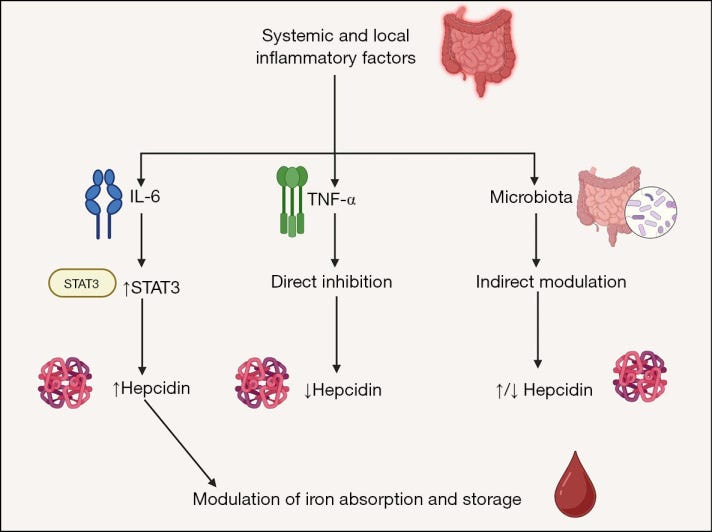
Sinking the Iron Ships
Let’s think of hepcidin as a cellular security guard. It targets and destroys ferroportin (a specialised protein), which is the only doorway iron can use to exit cells and enter the bloodstream.
Iron absorption from the food you eat is blocked.
Macrophages (immune cells that recycle old red blood cells) lock their iron away inside a storage protein called ferritin instead of releasing it.
Within hours of an infection, circulating iron levels in the blood plummet.
The Evolutionary Arms Race
This defence is super effective against most opportunistic bacteria, but these little critters have evolved their own secret counter-weapons. What these bacteria do is secrete incredibly powerful iron-binding molecules called siderophores. These molecules act like tiny magnets, stripping iron away from the body’s transport proteins (like transferrin) to feed the bacteria. In response, your body produces another protein called lipocalin-2, which exists solely to intercept and neutralise those bacterial magnets.
So while this defence strategy is brilliant for short-term infections, it causes problems if inflammation becomes chronic. If your body is under constant inflammatory stress, hepcidin stays high, iron remains locked away indefinitely, and your body can’t make enough new red blood cells. In turn, this leads to Anaemia of Chronic Disease (or anaemia of inflammation). This is what happened to me. I suffered from super heavy periods for decades - since day one. I was anaemic to the point it became ‘normal‘ for me to be knackered all the time. So just how do these opportunistic critters steal your iron stores?
When you are already short on iron, a bacterial infection triggers a kind of microscopic tug-of-war. Because free iron is so toxic to cells, your body never lets it float around freely anyway; it keeps it tightly bound to transport proteins like transferrin and lactoferrin. So to survive, these clever little buggers developed highly sophisticated ways to literally rip that iron away from your body’s proteins.
The Three Ways Bacteria Steal Your Iron
The critters use multiple strategies depending on what they are targeting:
Sending Out Siderophore Magnets
The most common weapon is the siderophore. Bacteria make these tiny chemical compounds and release them into your tissues or bloodstream.
Siderophores have a chemical affinity for iron that is significantly higher than your body’s own transport proteins.
They function like hyper-powerful magnets, stripping iron right off your transferrin.
Once the siderophore has trapped an iron atom, it forms a siderophore-iron complex.
The bacterium then pulls it back in through special surface receptors to feed itself.
The Direct High-Jacking
Some of these bacteria skip the magnets entirely and go for direct theft. They evolve custom receptors on their outer membranes that perfectly fit human transferrin or lactoferrin (a bit like endocrine disruptors that fit hormone receptors in the uterus). The bacteria binds directly to your transport protein, forces it open, pumps the iron inside its own cell, and discards the empty human protein back into your bloodstream.
Now I don’t know about you, but this sounds like a scene from a horror movie. Just saying.
Smashing Red Blood Cells (Hemophores)
If these bacteria cannot get enough iron from your transport proteins, they go after your red blood cells. These pathogens then release toxins called hemolysins that burst your red blood cells open, spilling out haemoglobin (the oxygen-carrying protein that holds the vast majority of your body’s iron). The bacteria then deploy specialised proteins called hemophores to bind to the freed heme, dragging it back to the bacterial cell wall to strip the iron out.
How Your Body Fights the Theft
Your immune system is not exactly taking a break while this is all going on. As a counter-defence, your phagocytes (immune cells) deploy Lipocalin (transport proteins), which acts like a specialised interceptor, and its exact shape fits over the bacterial siderophores, blocking them from capturing iron or returning to the bacterium. This constant chemical wrestling match is happening whenever your immune system faces a threat.
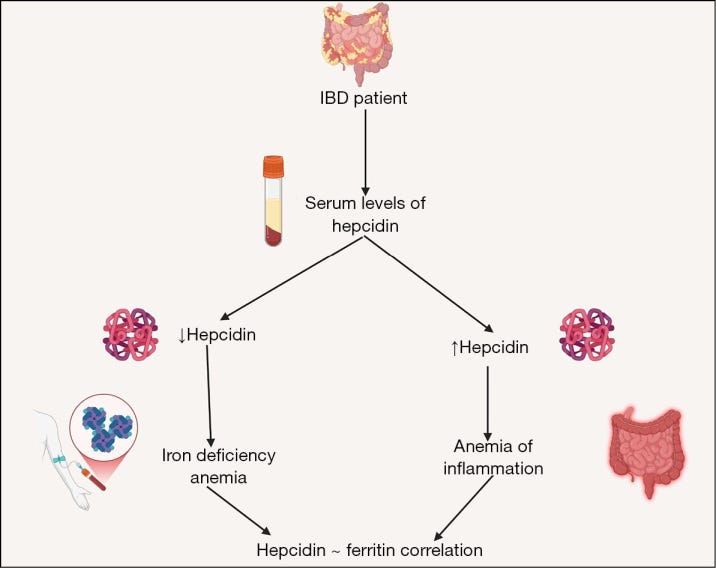
When your doctor or someone in a natural health group looks only at the low iron numbers without asking why they are low or blindly prescribing iron pills at the problem can range from completely useless to downright harmful.
There are three major issues with treating low iron or low ferritin with standard supplementation without addressing the root cause:
The Supplement Becomes Fuel for the Enemy
If your iron stores are low because your body is actively fighting off an opportunistic bacterial infection, chronic parasite, or fungal overgrowth, your body is deliberately hiding that iron to protect you.
When you pour high-dose oral iron supplements into your gut, you bypass your body’s protective locking mechanism. You are essentially delivering a massive, easily accessible smorgasbord straight to the pathogens. Instead of healing your fatigue, you end up inadvertently feeding the infection, allowing the bacteria to replicate faster and making your anaemia ten times worse.
High Hepcidin Blocks Absorption
As I mentioned earlier with nutritional immunity, inflammation triggers the hormone hepcidin, which slams the door on iron absorption in the gut.
If you have low iron due to chronic inflammation (say, from an undiagnosed infection, autoimmune flare, or even severe gut dysbiosis), your hepcidin levels are sky-high. If you then swallow a standard iron pill, your gut cells literally cannot absorb it. The iron just sits in your digestive tract, unabsorbed.
Gut Inflammation and Cellular Damage
Now, because the unabsorbed iron sits in your intestines doing nothing, it causes a cascade of unpleasant side effects. Free iron is highly reactive and causes oxidative stress in the gut.
It feeds unhelpful, opportunistic bacteria in the colon (like E. coli), which love iron, while wiping out beneficial bacteria (like Lactobacillus and Bifidobacteria) that do not require iron.
This imbalance leads to the classic side effects of iron pills: severe constipation, cramping, nausea, and dark stools.
Ultimately, it damages your gut lining, creating more inflammation, which drives hepcidin even higher, creating a vicious, exhausting cycle.
This is why it is vital to differentiate between Absolute Iron Deficiency (where you are low on iron simply because you lost it, like from years or decades of heavy bleeding) and Functional Iron Deficiency (where you have iron, but your body has locked it away due to inflammation). If low iron is purely from heavy bleeding, supplements are usually necessary to rebuild what was lost. But if there is an infection or systemic inflammation present at the same time, the inflammation must be treated first, or the iron supplement will cause more harm than good.
When I learned this, it made so much sense why I just couldn’t get better, no matter what I did. If more pills or supplements might not be the answer, what does one do? What should we be checking for? What would you need to be assessed against?
Essentially, what is the best way forward so you are not spinning your wheels?
From a holistic perspective, this is where you shift from just treating symptoms to healing the whole body. If you are just given iron pills for low ferritin, the symptoms are being treated. The actual strategy focuses on discovering why the iron is low, evaluating whether your body is actively blocking it, and fixing the underlying leaks and inflammation.
STEP 1 - The Correct Lab Evaluation - Looking Beyond Ferritin
Standard medicine often just checks Ferritin (iron stores) and Hemoglobin (red blood cells). My approach is to look at a complete iron panel alongside inflammatory markers to read between the lines.
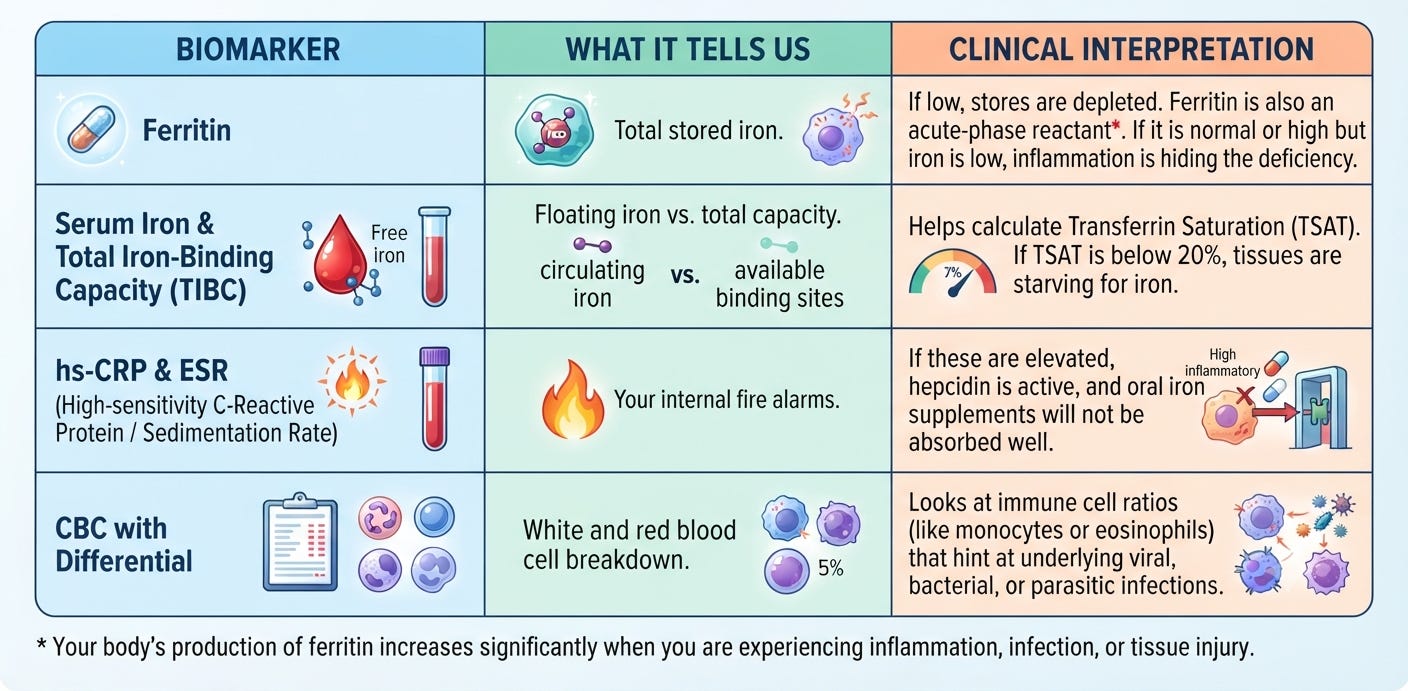
To find the root cause, I would assess my client against three specific categories:
Chronic Blood Loss as in heavy bleeding. This must be addressed at the root cause rather than just constantly replacing the lost blood or trying to top up iron stores.
Gut Absorption Issues as in low stomach acid. Iron requires robust stomach acid to be converted into an absorbable form of iron. Long-term use of antacids (PPIs), aging, or H. pylori infections ruin this process. Gut Infections like Small Intestinal Bacterial Overgrowth (SIBO), parasites, or severe dysbiosis can consume your dietary iron before you can absorb it.
Systemic Inflammation as in chronic hidden infections like UTIs, dental infections or mould exposure and autoimmune activity.
Your Holistic Anaemia Busting Action Plan
Because I know most women want to try and go it alone, at least let me give you a systematic step-by-step process so you don’t get lost.
Step 1: Quench the Fire (Lower Inflammation)
Focus on calming down your immune system and identifying the source of inflammation. For example, if it’s your gut, work backward to identify the source of the inflammation. So this could be gut issues caused by food sensitivities or bacterial overload. Once inflammation drops, hepcidin will decrease, and your cellular vault will naturally open back up.
Step 2: Fix your Digestion
Optimise stomach acid. You can apple cider vinegar or Betaine HCl with meals and treat any gut dysbiosis so your gut lining can actually absorb minerals from food. It’s important to correct your gut first. If you do have food sensitivities, you will need to avoid those foods for a time.
Step 3: Use Smarter Replenishment Strategies
If iron is desperately needed but your gut is compromised or inflamed, you can use these methods instead of oral pills:
IV Iron Infusions: When your gut cannot absorb iron due to chronic illness or heavy bleeding, a targeted IV infusion bypasses the digestive tract completely, avoiding the risk of feeding gut pathogens. Your doctor can advise you if this is appropriate.
Food-First & Co-Factors: Focusing on highly bioavailable heme iron from quality food sources such as grass-fed red meat consumed alongside a good quality Vitamin C, which significantly boosts absorption.
The Path from Guessing to Knowing
Ultimately, the route out of chronic anaemia is recognising that low iron is rarely an iron intake problem and is almost always an iron loss, iron absorption, or iron utilisation problem. But knowing what is great. The how is where most women get stuck.
You don’t have to keep spinning your wheels, hoping that the next bottle of supplements will finally be the one that works. You can stop guessing and start listening to the specific, nuanced signals your body is already broadcasting.
This is where we move beyond the standard lab markers and into the hidden energetics of your health.
Your voice can help you identify hidden energetic stressors - the imbalances that standard blood tests often overlook. Yes, I said your voice. By analysing the frequency and energetic state of your body, you can uncover what your body is struggling with, and most importantly, in what areas of your body.
All it takes is 15 seconds and you will receive a personalised report that acts as your personal roadmap, showing you exactly what your body has been trying to tell you so you can stop treating the symptoms and start working on the actual root causes, in the right order.
Ready to stop guessing and start healing?
Go here to start your Voice Scan and kickstart your anaemia reversal journey today.
For a detailed breakdown of the inflammatory pathways involved in iron regulation, see: Parreira, L. F. (n.d.). The role of hepcidin in the inflammatory and iron homeostasis axis in inflammatory bowel diseases: a systematic review. Translational Gastroenterology and Hepatology. https://tgh.amegroups.org/article/view/10081/html
Disclaimer
This article is for informational and educational purposes only. It is not intended to be a substitute for professional medical advice, diagnosis, or treatment. Always seek the advice of your physician or other qualified health provider with any questions you may have regarding a medical condition. Never disregard professional medical advice or delay in seeking it because of something you have read in this article.
I am not a medical professional, and the information shared here is based on personal experiences, two decades of knowledge on working on myself, the many brilliant teachers who have taught me everything I know; but most of all and the most important is the insights from my clients. Always consult with a healthcare professional before making any changes to your health regimen or starting a new treatment plan.
Your health and well-being are unique to you, and it’s important to take a tailored approach under the guidance of a qualified expert.